About Leaning Tower of Pisa
The Leaning Tower is the bell tower of Pisa Cathedral, and it stands in the Piazza dei Miracoli together with the cathedral, the Baptistery and the monumental cemetery, the Camposanto. Work began in 1173, at the height of Pisa’s power as a maritime republic. When the builders reached the second storey in 1178, the tower had started to sink into the soft clay and sand on its south side.
Construction stopped for almost a century, partly because of wars, and that pause probably saved it: the soil had time to settle and grow firmer. When building resumed, the upper storeys were made slightly taller on the leaning side to correct the tilt, which is why the tower is gently curved. The bell chamber on top was finished around 1372, and it holds seven bells.
Over the centuries the lean kept growing. By 1990 it had reached about 5.5 degrees and the tower was closed to the public. Engineers then carefully removed soil from under the north side, and by 2001 the tower had been pulled back to a lean of about four degrees, which should keep it standing for centuries to come.
The tower and the square around it are a UNESCO World Heritage Site. The best-known Pisa story is that Galileo, who was born in the city, dropped balls of different weights from the top to show that they fall at the same speed, though historians doubt it really happened.
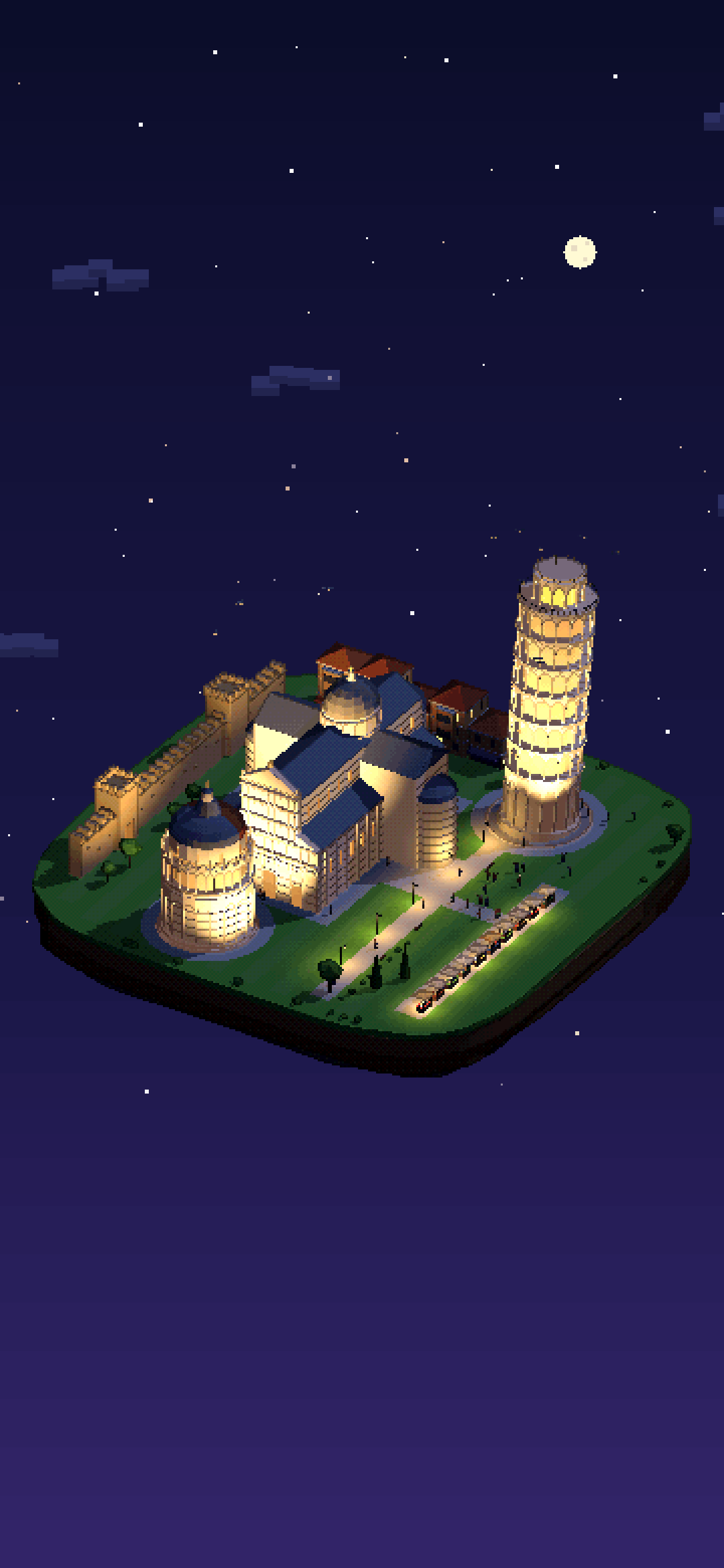
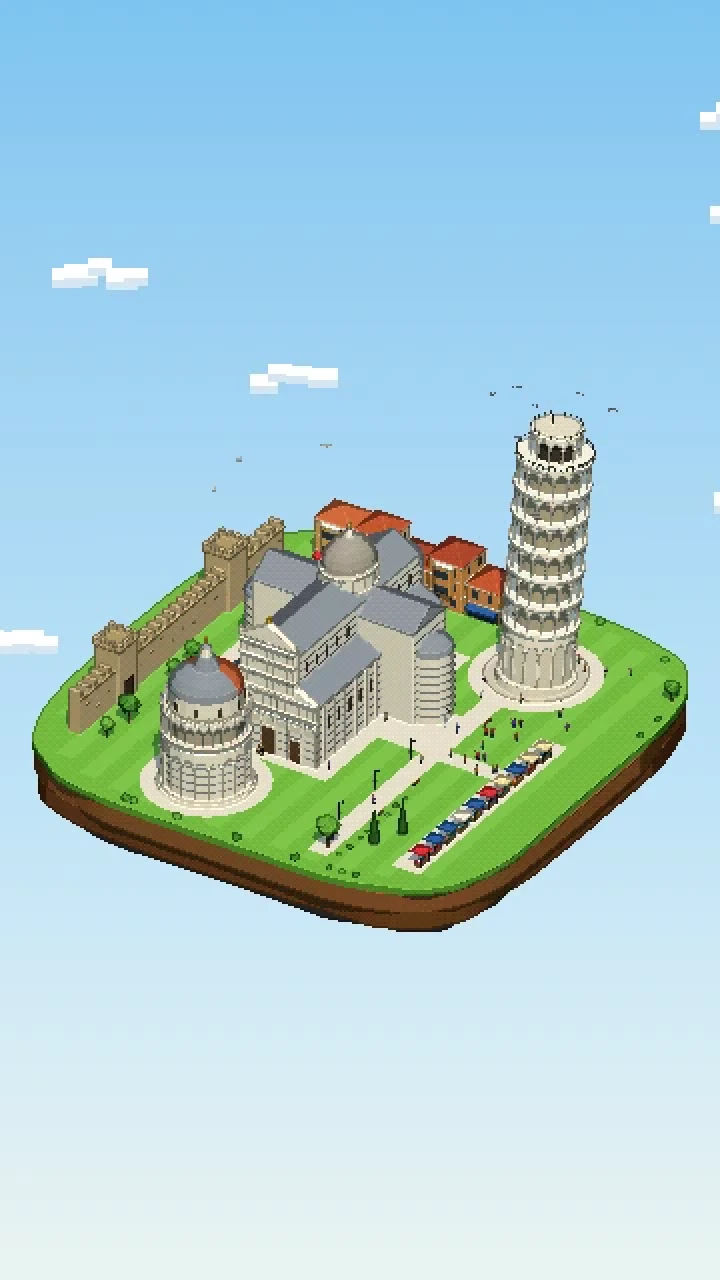
The diorama
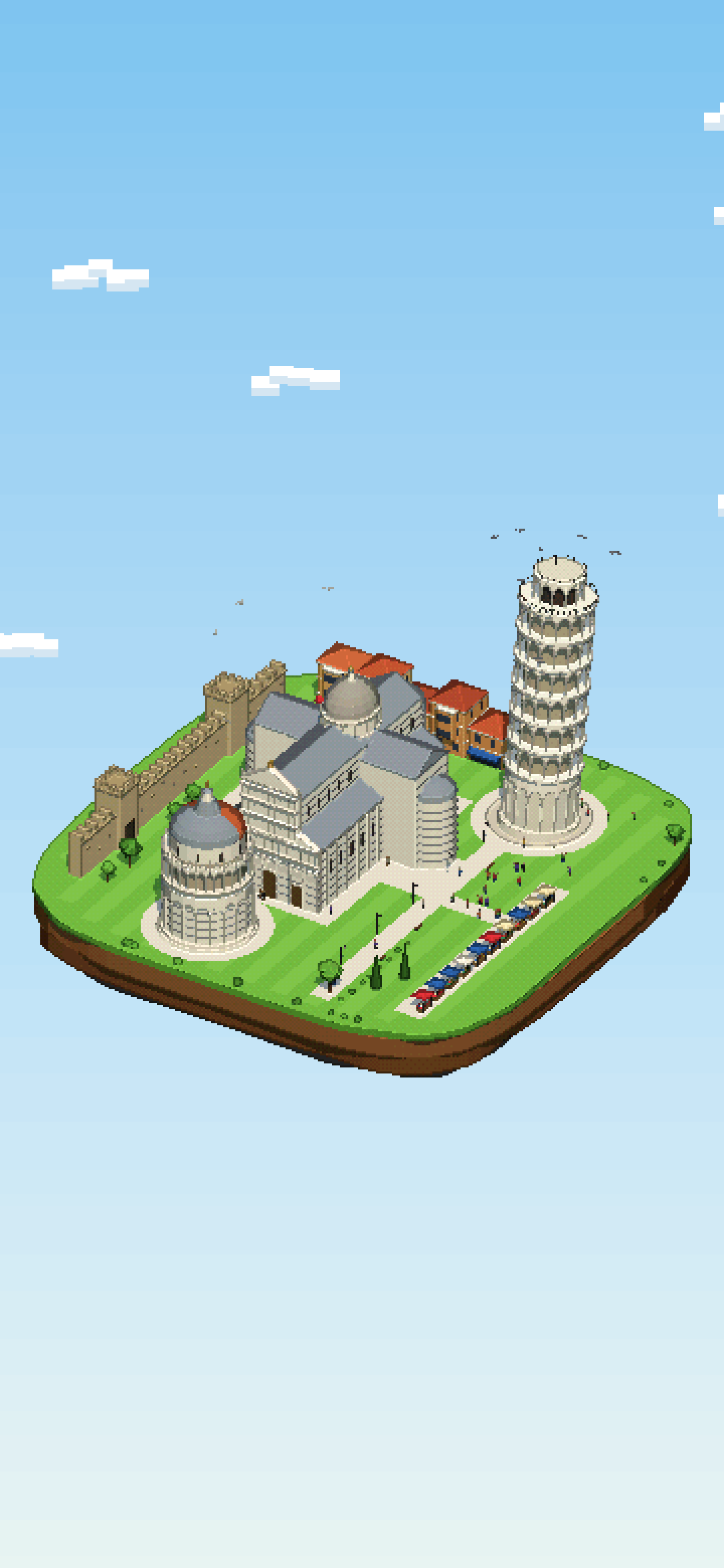
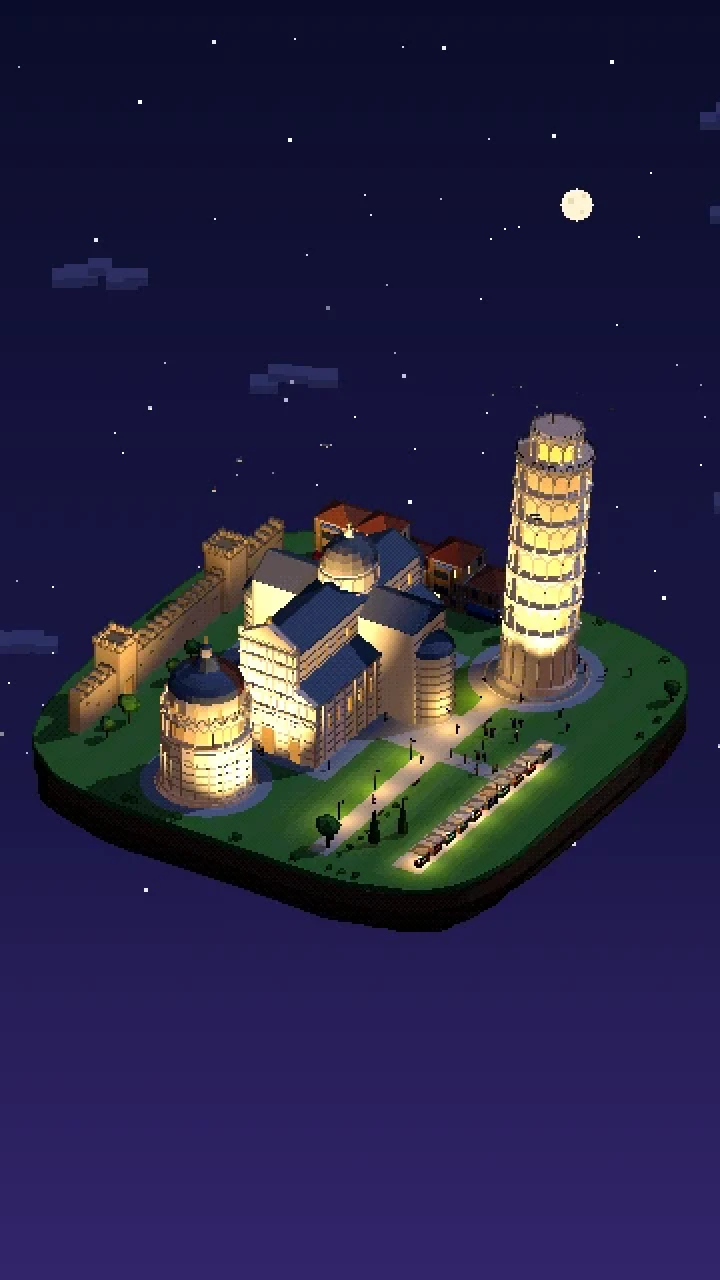
The tower is modelled storey by storey: a base of blind arches with the door, six open galleries each with a ring of columns and arches in front of a set-back wall, the railed parapet, and the smaller bell chamber with its bells, lit from inside at night. It sits in a shallow pit in the lawn, as the real one does, and leans about six degrees, a little more than in reality so the tilt reads at pixel scale.
Behind it stand the Duomo, with its striped marble walls, four tiers of loggias on the facade and an elliptical dome, and the round Baptistery with its gothic gables and its half-red, half-lead dome. The bright lawn has mowing stripes and white paths, the old city wall runs along the back with a gate and square towers, and Pisan houses in ochre plaster line one side. At night floodlights turn the marble warm and the souvenir stalls light up.
Things to spot
- Tourists on the lawn with an arm raised, “holding up” the tower
- Photographers lining up the shot, with camera flashes at night
- Souvenir stalls with miniature leaning towers
- Pigeons circling the top of the tower, and gulls over the Duomo
- The gate in the city wall
What we simplified
- The tower has 16 columns per gallery instead of 30, and leans more than the real one.
- The Duomo and the Baptistery are shortened and moved closer together, and the Camposanto is left out.
Questions
Why does the Leaning Tower of Pisa lean?
The tower leans because it started to sink into the soft clay and sand on its south side when the builders reached the second storey in 1178.
How much does the Leaning Tower of Pisa lean?
The Leaning Tower of Pisa leans about four degrees today. By 1990 the lean had reached about 5.5 degrees, and engineers removed soil from under the north side until 2001 to pull it back.
How tall is the Leaning Tower of Pisa?
The Leaning Tower of Pisa is about 56 metres tall, with eight storeys including the bell chamber, which holds seven bells.
When was the Leaning Tower of Pisa built?
The Leaning Tower of Pisa was built in three stages between 1173 and 1372. Construction stopped for almost a century, which gave the soil time to settle and probably saved the tower.
How was this pixel-art diorama of the Leaning Tower of Pisa made?
It is a real-time Three.js scene running on this page, drawn at 360 × 640 pixels with dark outlines and a small palette, then scaled up without smoothing. The tower leans about six degrees, a little more than the real one, so the tilt reads at pixel scale. Press “Explore in 3D” to drag it round and switch between day, dusk and night.