About Stonehenge
Stonehenge was built over many centuries. It began around 3000 BC as a circular ditch and bank on Salisbury Plain, and the great sarsen stones were raised around 2500 BC. Most of the sarsens came from West Woods, about 25 kilometres to the north, while the smaller bluestones were brought from the Preseli Hills in Wales, roughly 230 kilometres away.
The outer circle, about 30 metres across, once had 30 upright sarsens, each about four metres high, joined at the top by a continuous ring of lintels held with carpentry joints. Today 17 of those uprights still stand and six lintels remain in place. Inside stood a horseshoe of five trilithons, two uprights and a lintel each, rising towards the tallest at the south-west, about 7.3 metres high.
The monument is laid out on the solstice axis. At midsummer the sun rises in the north-east close to the Heel Stone, a huge unshaped sarsen just outside the entrance, and at midwinter it sets in the south-west, behind the tallest trilithons. Smaller bluestones were set in a circle and a horseshoe among the sarsens, and some have fallen or survive only as stumps.
In 1915 the stones were sold at auction to Cecil Chubb for £6,600, and in 1918 he gave them to the nation. Several fallen stones were straightened or raised again during the twentieth century. Stonehenge became a UNESCO World Heritage Site together with Avebury in 1986, and English Heritage looks after it today.
The diorama
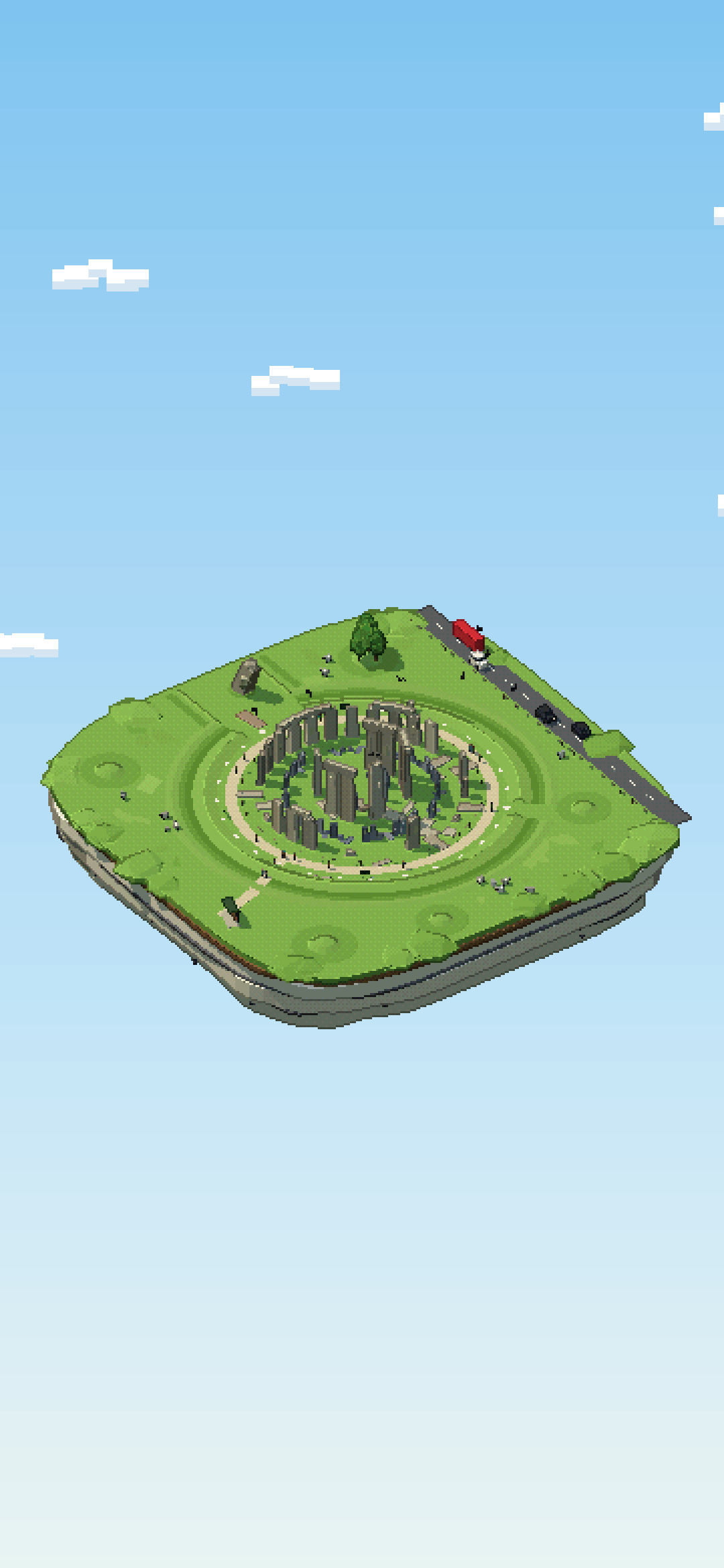
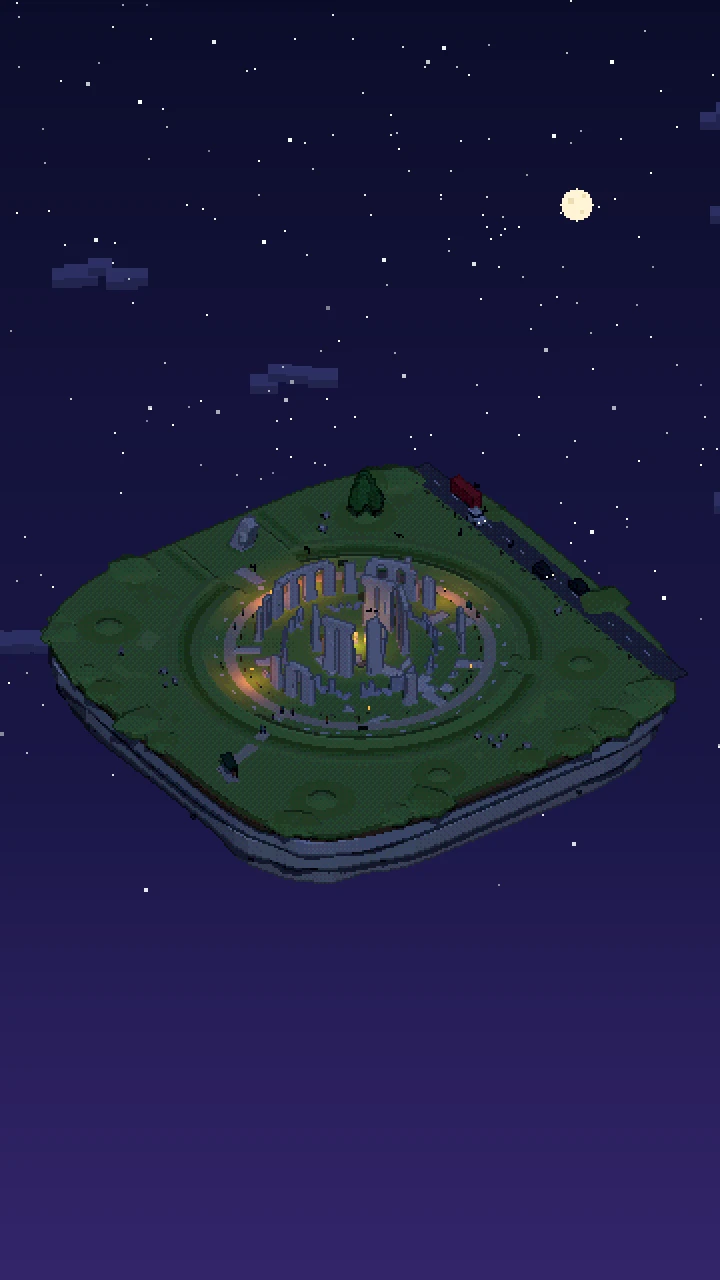
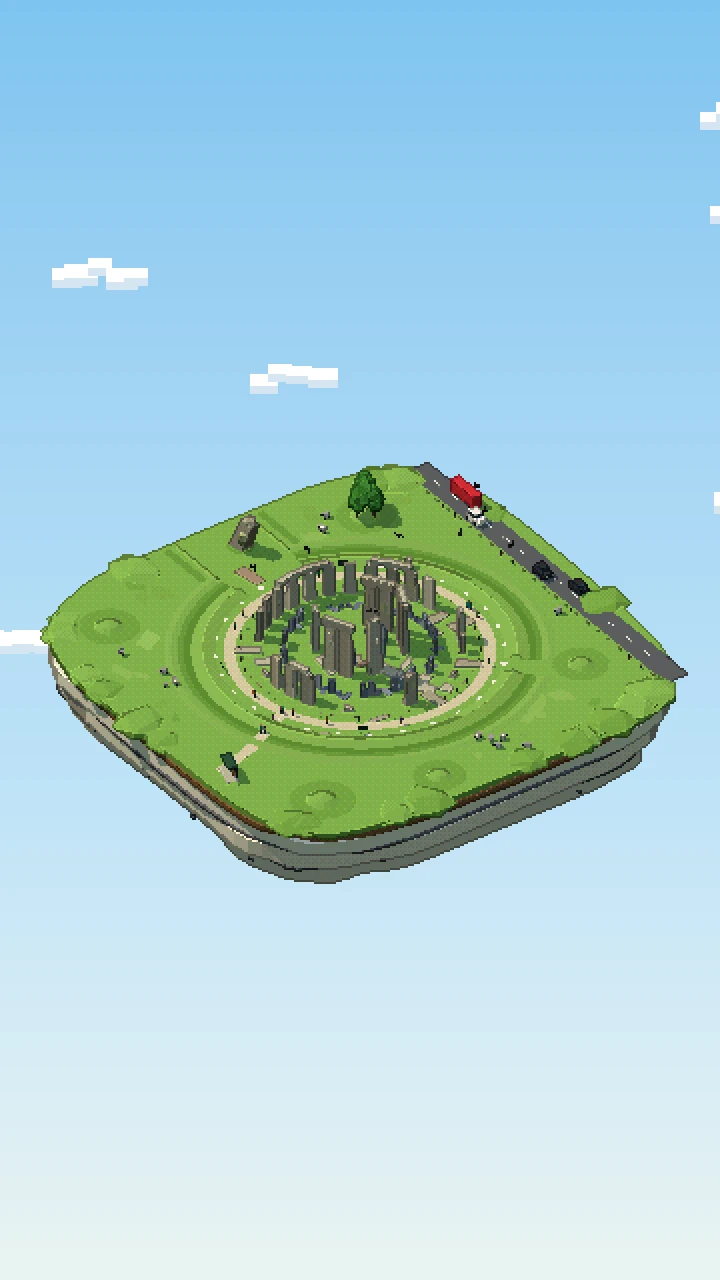
The stones are laid out from the real plan at one unit per metre, with their heights stretched a little so they read in pixels. The sarsen circle has its standing uprights with six lintels, fallen stones lying in the grass and gaps where stones are missing. Inside are three complete trilithons, the Great Trilithon with only one upright still standing above its fallen partner and lintel, a fifth with one upright left, and the bluestones in a ring and a horseshoe, some upright, some stumps.
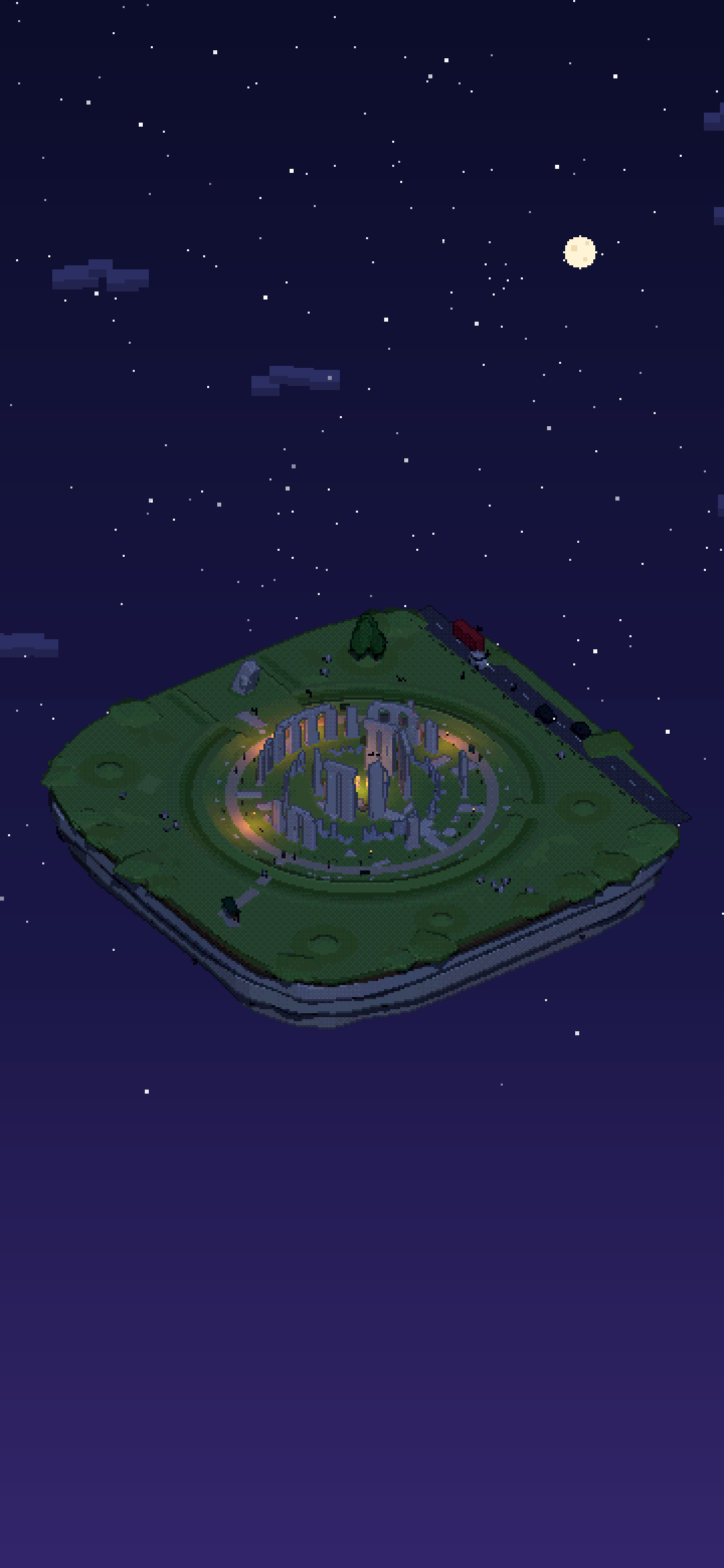
Around the stones runs the circular ditch and bank, with white discs marking the Aubrey Holes, the twin banks of the Avenue and the leaning Heel Stone outside the entrance. Tourists walk the visitor path, sheep graze among round barrows and traffic runs along the A303. A short drizzle opens umbrellas, then the setting sun drops in line with the Heel Stone and casts long shadows down the axis. At night the stones turn silver under the moon, while torches and a small lantern-lit gathering glow in the circle.
Things to spot
- The sunset lining up with the Heel Stone
- Umbrellas opening in the drizzle
- Sheep grazing beside the barrows
- The Great Trilithon’s lone standing stone
- Rooks wheeling over the circle
- A lantern-lit circle of white robes at night
What we simplified
- The earthwork, the Avenue and the Heel Stone are pulled in much closer to the circle than they really are, and the A303 is moved to the edge of the island.
- Stones are rough-cut blocks, and the bluestones and fallen pieces are placed to match the general pattern rather than stone by stone.
- The sun in the diorama sets along the axis towards the Heel Stone; in reality the Heel Stone marks the midsummer sunrise, and the midwinter sunset lies in the opposite direction.
Questions
How old is Stonehenge?
Stonehenge was built in stages. The earthwork ditch and bank date from about 3000 BC, and the large sarsen stones were raised around 2500 BC.
How tall are the stones of Stonehenge?
The uprights of the outer sarsen circle are about four metres high. The five trilithons inside rise towards the south-west, where the tallest stands about 7.3 metres high.
Where did the stones of Stonehenge come from?
Most of the big sarsens came from West Woods, about 25 kilometres north of the site. The smaller bluestones were brought from the Preseli Hills in Wales, roughly 230 kilometres away.
Is Stonehenge aligned with the sun?
Yes. Its main axis follows the solstices: at midsummer the sun rises in the north-east near the Heel Stone, and at midwinter it sets in the south-west, behind the tallest trilithons.
How was this pixel-art diorama of Stonehenge made?
It is a real-time Three.js scene running on this page, drawn at 360 × 640 pixels with outlines and a small palette, then scaled up without smoothing. Press “Explore in 3D”, drag to turn it, and switch between day, dusk and night.