About Beşiktaş Stadium
The stadium stands where Beşiktaş have played for most of their modern history, on the shore of the Bosphorus below the Dolmabahçe Palace. The first stadium here, inaugurated in 1947 as Dolmabahçe Stadium, held about 16,000. It was renamed Mithat Paşa Stadium in 1952 and İnönü Stadium in 1973, and was renovated in 2004 to hold about 32,000.
Demolition of the old İnönü began in June 2013, and the new stadium was built in the same bowl. Two parts of the old ground were kept as protected monuments: the walls of the Eski Açık stand (the “old open” end) and the two towers that flank it, with the monumental gate that faces the palace. The new stadium opened on 11 April 2016 with a 3–2 win over Bursaspor and was first called Vodafone Arena, then Vodafone Park from 2017. It has been called Tüpraş Stadyumu since the Vodafone deal ended in 2023, and UEFA uses the name Beşiktaş Park.
The design leans on its setting. The height was limited so the building would not spoil the skyline between Taksim and the palace, and the outside is an elliptical, Colosseum-like ring of arches. The roof is a lightweight cable structure: a compression ring on the outside, tension rings on the inside, radial cables between them and a PTFE membrane on top. Its inner ring was lifted into place in November 2015.
The stadium hosted the 2019 UEFA Super Cup, in which Liverpool beat Chelsea on penalties, with Stéphanie Frappart as the first woman to referee a major men’s European final. It was also the venue of the 2026 Europa League final and is due to host the 2027 Conference League final. Sources differ on the architects, the capacity and even the number of executive suites, so the figures here are approximate.
The diorama
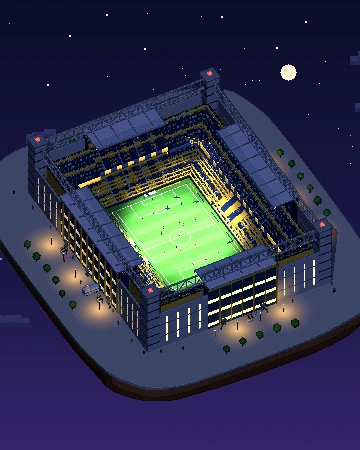
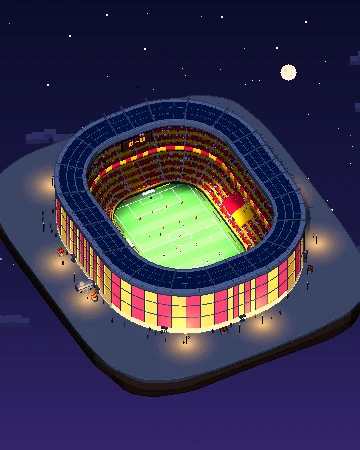
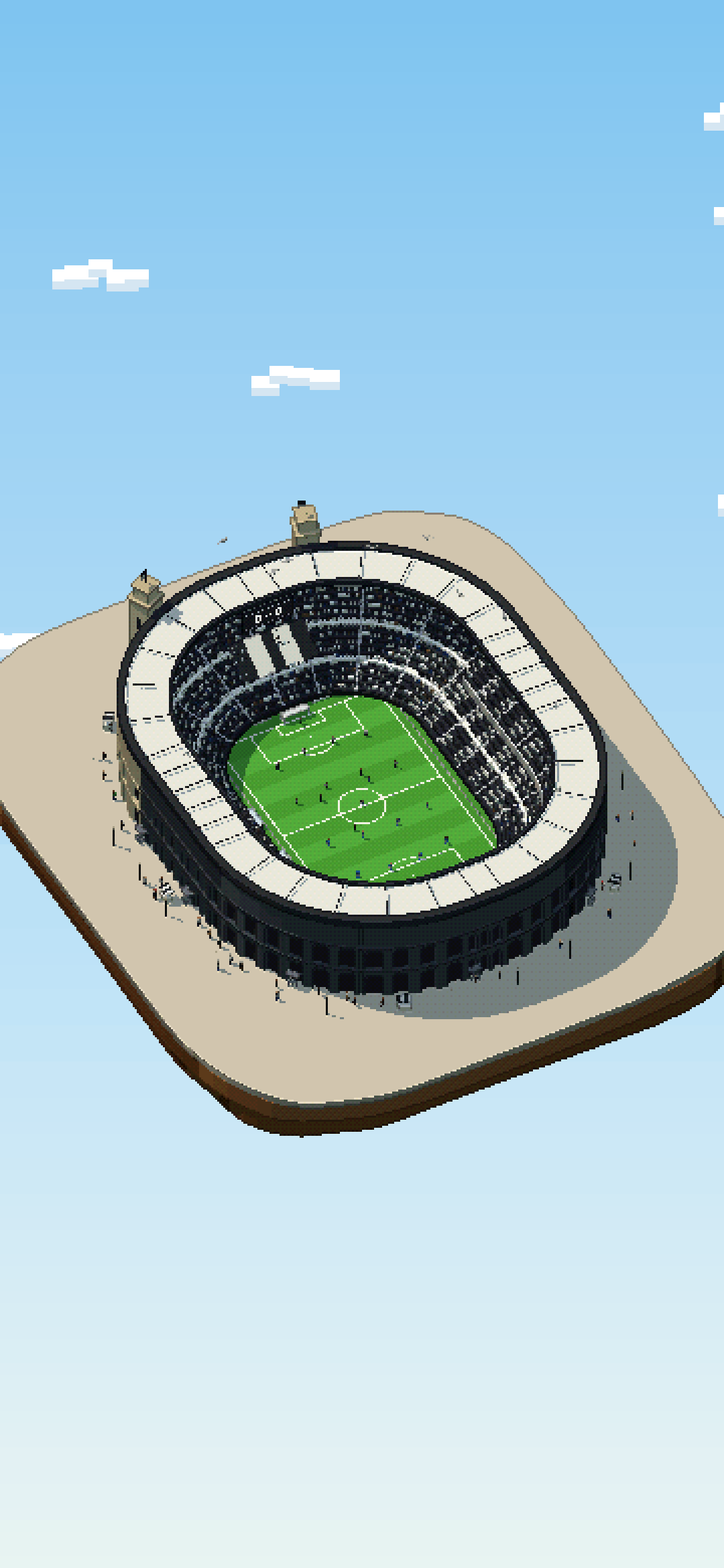
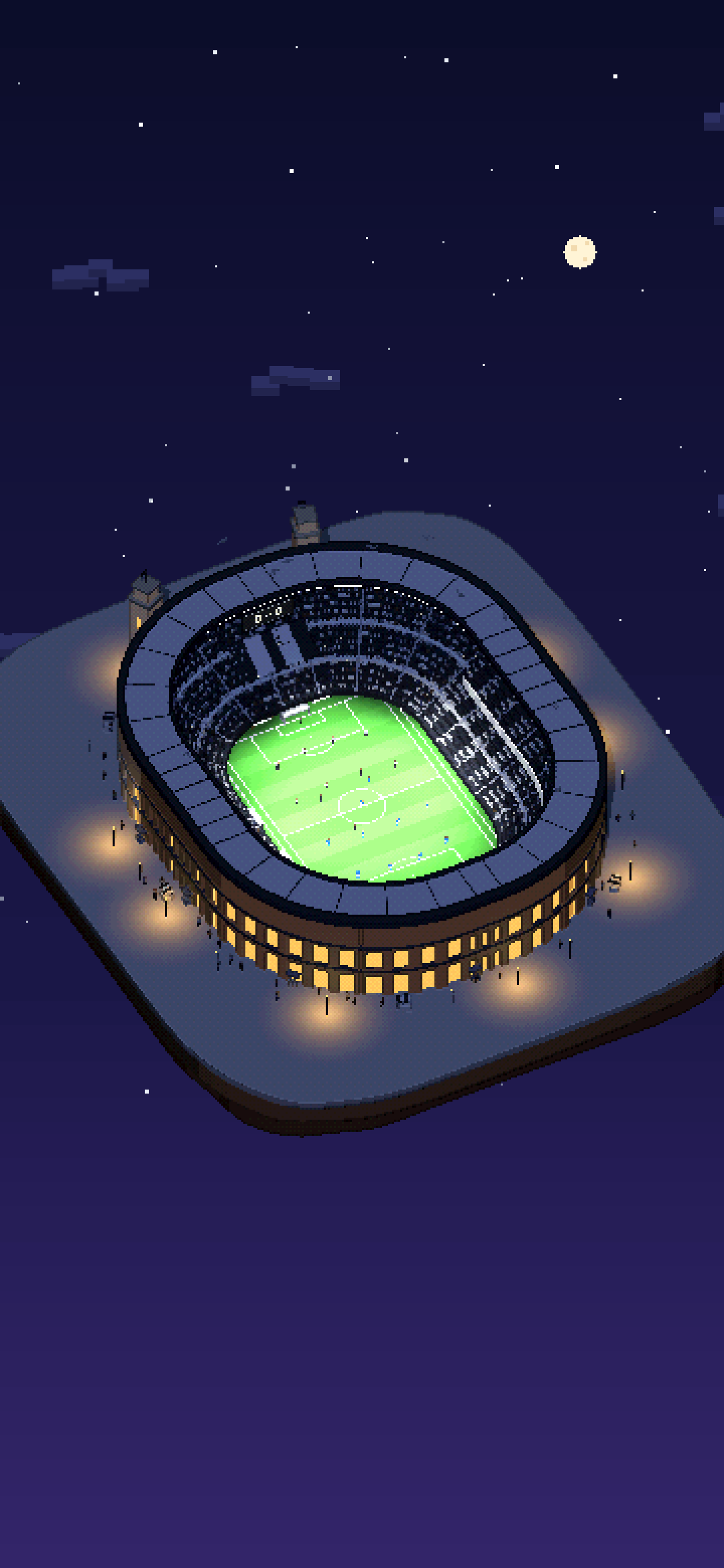
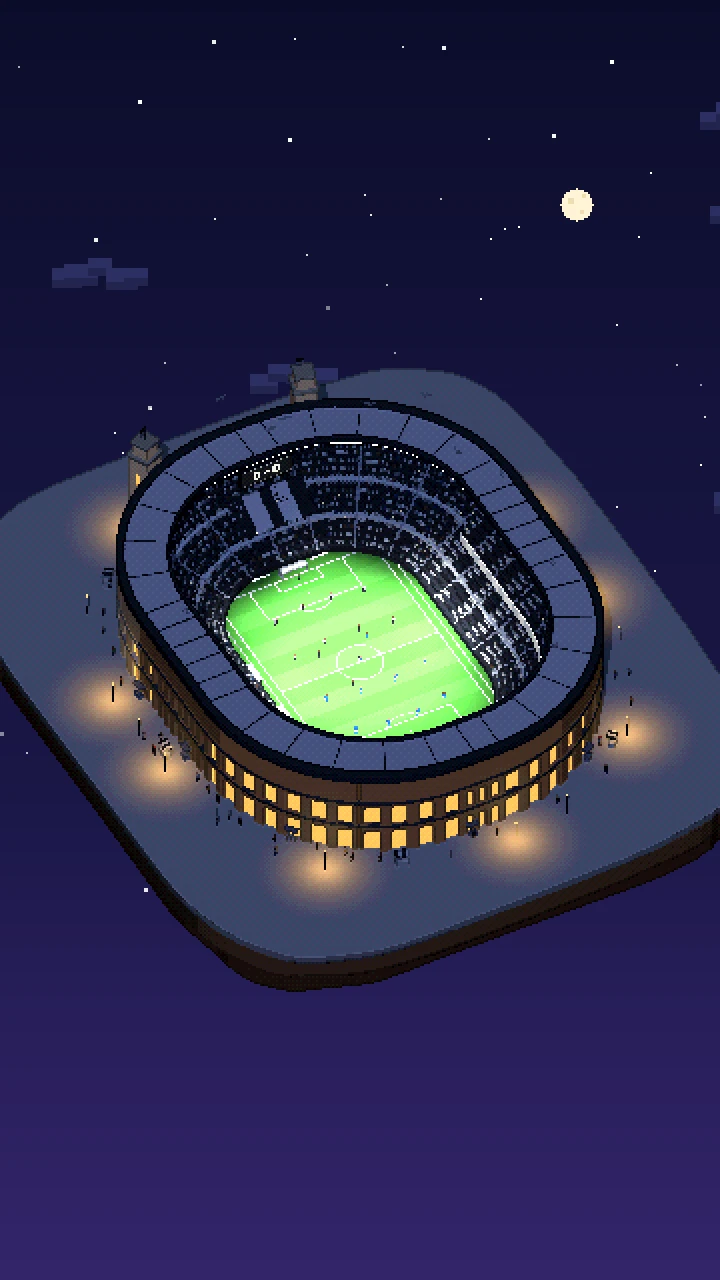
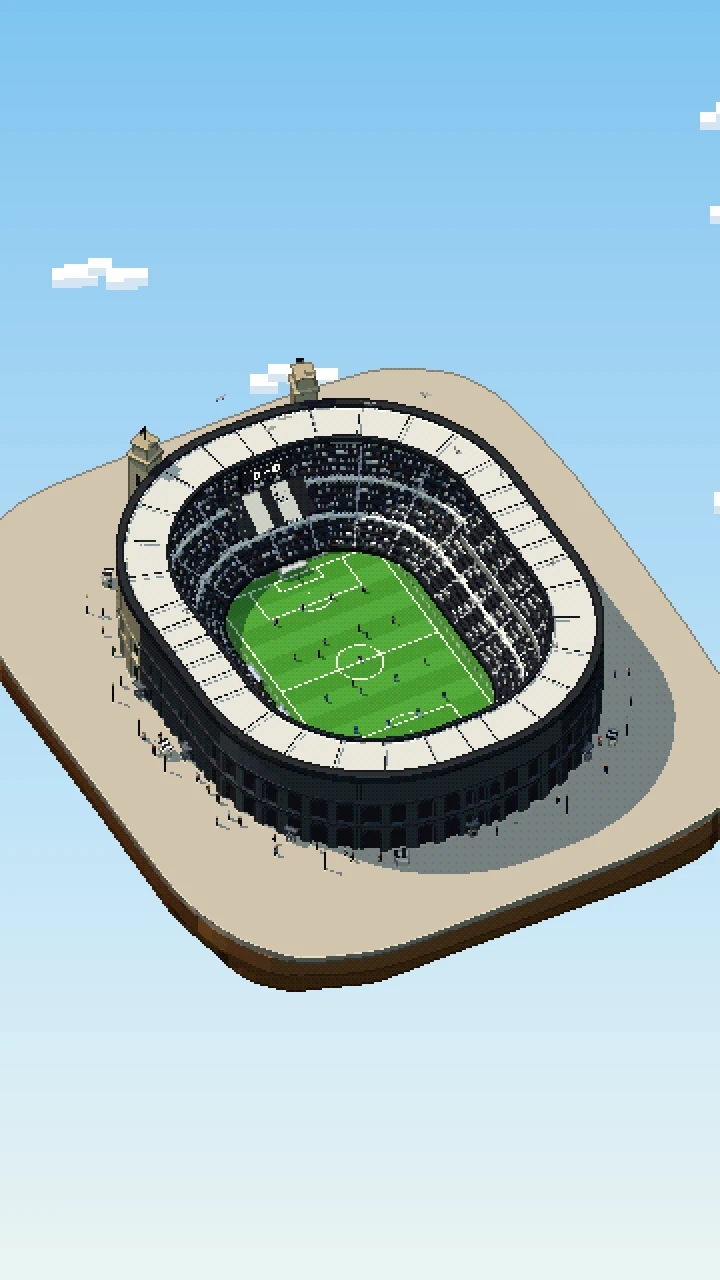
The diorama builds the stadium on a floating island of Dolmabahçe in Three.js and renders it as pixel art. The bowl is an ellipse with a facade of two storeys of arches: dark stone and glowing openings around most of the ring, and, at the Eski Açık end, a pale stone wall flanked by two tall towers with small black-and-white flags. The roof is low, as in life, and is modelled as a bicycle wheel with a heavy outer ring, a thin inner ring, radial cables and a white membrane between. The stands are black and white, and only club colours are used: there are no crests or sponsor names anywhere in the scene.
Then it plays a match. The day turns to a floodlit night while two teams, home in black and white stripes, run a scripted move that ends in a goal every 15 seconds. The crowd jumps, black-and-white tifo stripes go up across the far stand, a giant striped flag is passed over the Eski Açık end, and confetti is thrown after the goal. The screens hanging under the roof show 0–0 and then 1–0, and phone lights glow in the stands at night. Fans, stalls and gulls fill the forecourt outside.
Things to spot
- The two stone towers at the Eski Açık end
- Two storeys of arches lit from inside at night
- The cable roof: outer ring, radial cables and the white membrane
- The black-and-white tifo on the far stand
- The giant flag passed over the Eski Açık end
What we simplified
- The arches, towers and roof rings are stylised and not drawn to survey; the real roof has many more cables and columns, and proportions differ.
- The Eski Açık end is modelled as one long single tier with its stone wall; the real stand layout is more complex.
- Dolmabahçe Palace, the Bosphorus shore and the surrounding streets are not shown, only a plain forecourt.
- The match is a looping scripted move, and the players are plain figures in club colours with no names, numbers or crests.
Questions
Who plays at the Beşiktaş Stadium?
Beşiktaş play at the stadium at Dolmabahçe, by the Bosphorus. It opened on 11 April 2016 with a 3–2 win over Bursaspor.
Is this the old İnönü Stadium?
It is a new stadium built in the bowl of the old İnönü, whose demolition began in June 2013. The walls of the Eski Açık stand, its two towers and the monumental gate were kept as historic monuments.
What is the stadium called?
It opened as Vodafone Arena, became Vodafone Park in 2017 and has been called Tüpraş Stadyumu since 2023. UEFA uses Beşiktaş Park, and this page uses the neutral Beşiktaş Stadium.
How many people does it hold?
About 42,700. Sources give between 41,903 and 42,684, and an older plan said about 40,000, so the exact figure depends on source and year.
Which big matches has the stadium hosted?
The 2019 UEFA Super Cup (Liverpool against Chelsea, 14 August 2019) and the 2026 UEFA Europa League final. The 2027 Conference League final is due to be played there.
How was this pixel-art diorama of the stadium made?
It is a real-time Three.js scene running on this page, drawn at low resolution with dark outlines and a small palette, then scaled up without smoothing. The match, crowd, tifo, confetti and scoreboard are all animated live. Press “Explore in 3D” to drag it round and switch between day, dusk and night.
Isometric maps of Istanbul
Istanbul also has 2 isometric pixel-art maps made by the community: the whole city drawn tile by tile in the same SimCity-like style. See the maps of Istanbul →