About Şükrü Saracoğlu Stadium
Football has been played on this plot in Kadıköy, on the Asian side of Istanbul, since 1908, when the first matches were held on a meadow known as Papazın Çayırı, “the priest’s meadow”. Fenerbahçe bought the ground from the state in 1933, and by 1949 it was the largest football ground in Turkey, with room for about 25,000. The stadium is named after Şükrü Saracoğlu, a long-serving Fenerbahçe president who also served as Turkey’s foreign minister and, from 1942 to 1946, prime minister.
The ground you see today is mostly a product of the 1999–2006 rebuild. The old south stand came down in September 1999, the new double-tiered south stand opened in stages in 2001–02, the north and east stands followed in the same way, and the main grandstand finished the job in 2006. UEFA described the result as the first major stadium in Turkey built without a running track, with the stands only a few metres from the touchline.
In May 2009 it hosted the UEFA Cup final, the last one played under that name before the competition became the Europa League, and the first UEFA Cup final played in Turkey. Capacity figures vary by source: UEFA quoted 53,586 for the 2009 final, the club long used 50,530, and StadiumDB and Wikipedia now give about 47,900. Since 2015 the stadium has carried sponsors’ names, first Ülker and, from the 2025–26 season, Chobani. A modernisation that would raise the roof, add stands behind both goals and take capacity to roughly 64,000–65,000 has been announced, but figures and timing have shifted, so treat them as plans.
The diorama
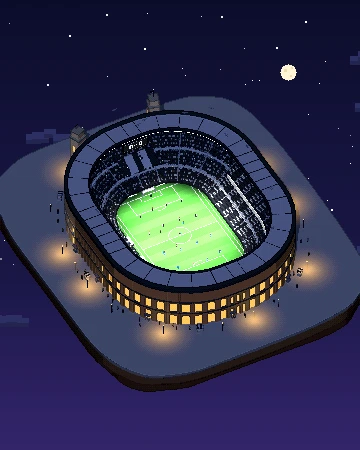
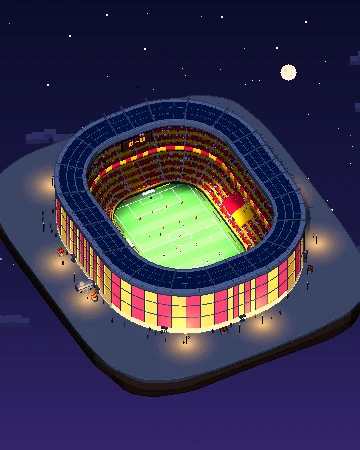
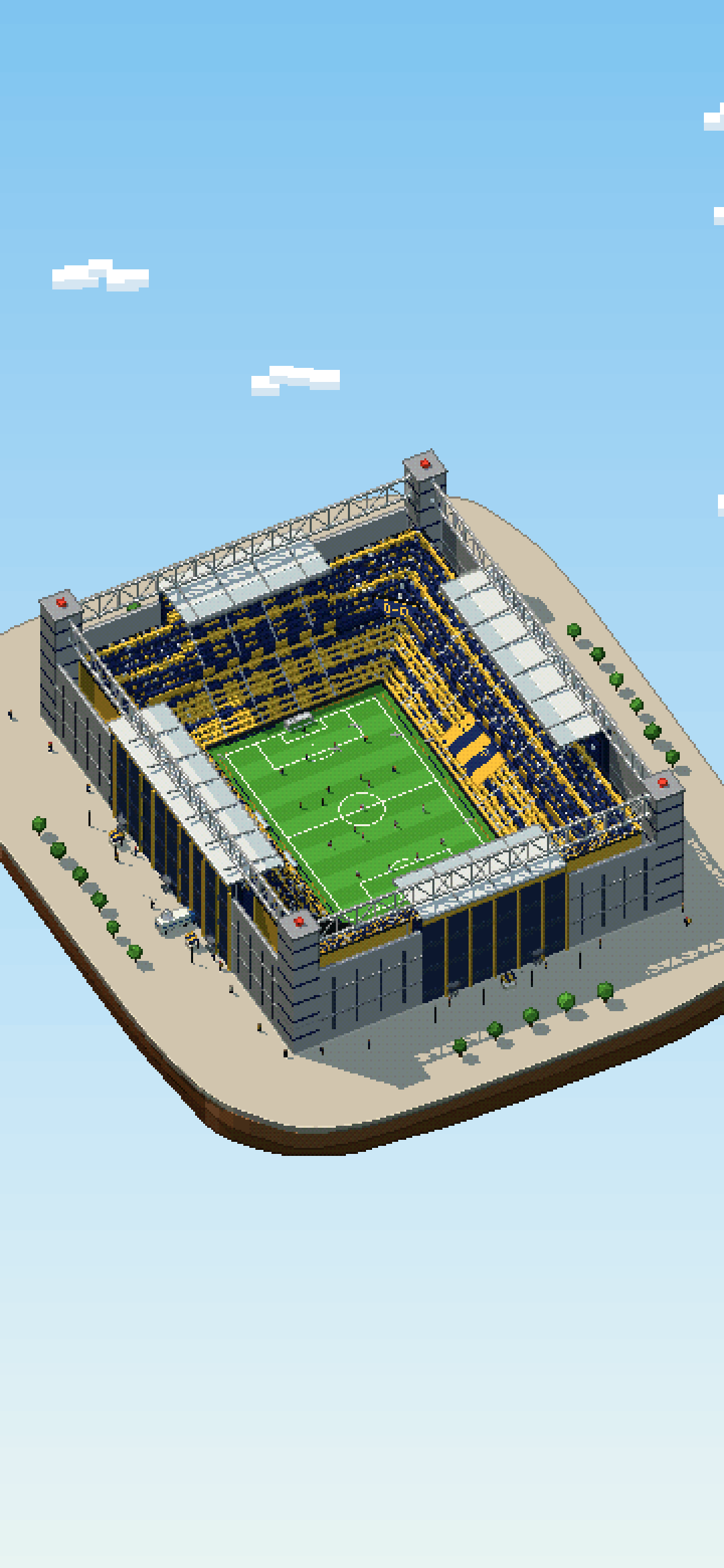
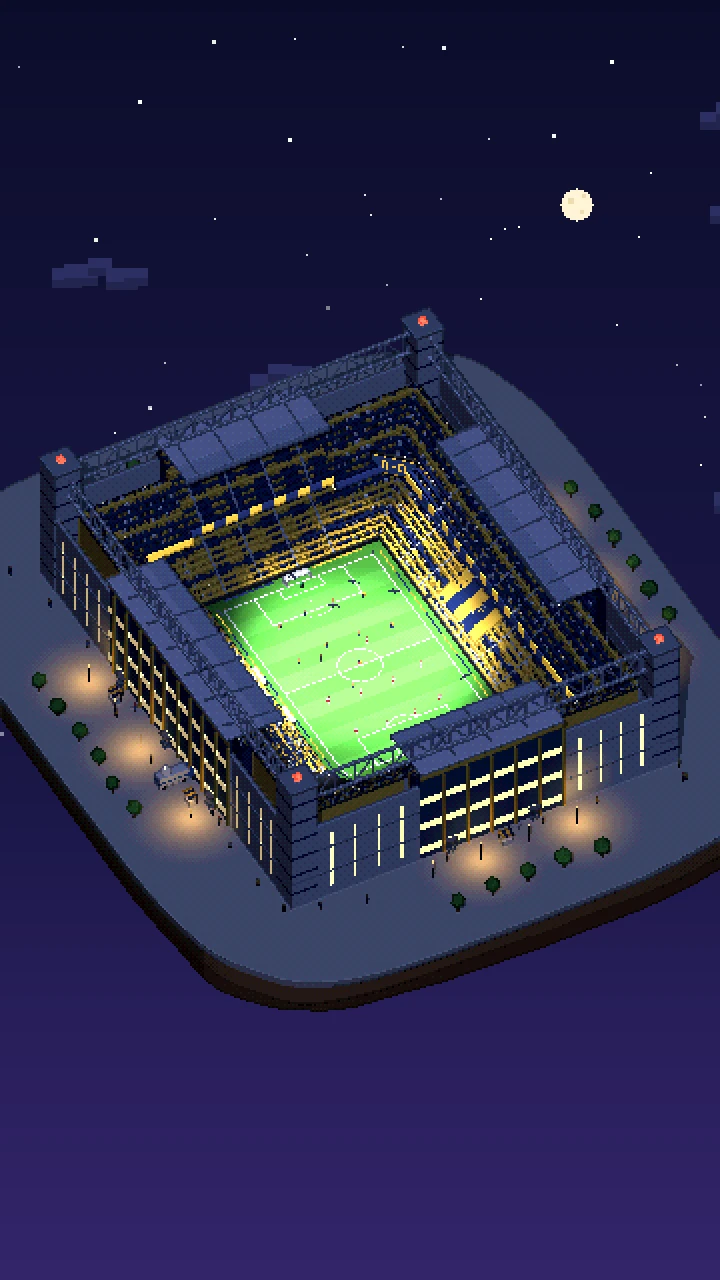
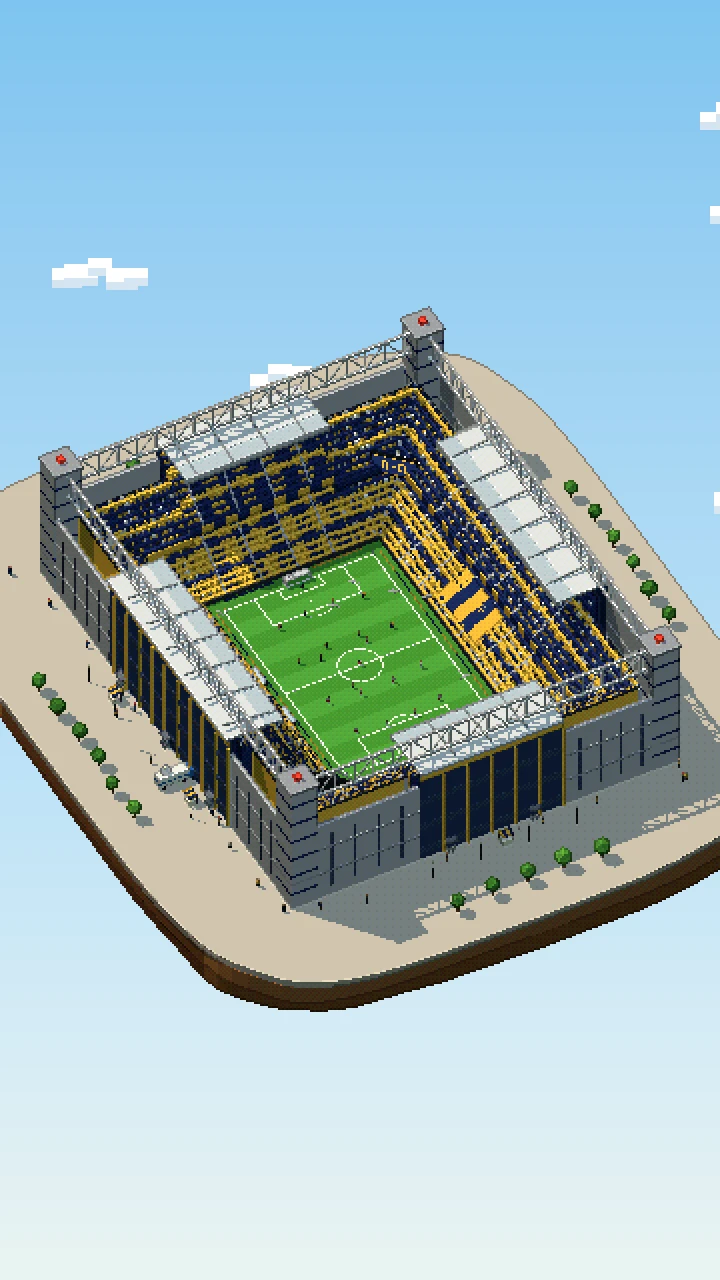
The diorama builds the stadium on a floating island of Kadıköy in Three.js and renders it as pixel art, like the other scenes on this site. The bowl is compact and rectangular, with no running track, and the stands rise steeply from the touchlines. The two ends behind the goals are the tallest, and the square corners are lower concrete blocks with slit windows. Four steel lattice trusses run between four concrete corner towers, carry the roof wings and give the skyline its silhouette. The long walls are clad in navy with glass bands and yellow fins, and the seats are yellow and navy. Only club colours are used: there are no crests or sponsor names anywhere in the scene.
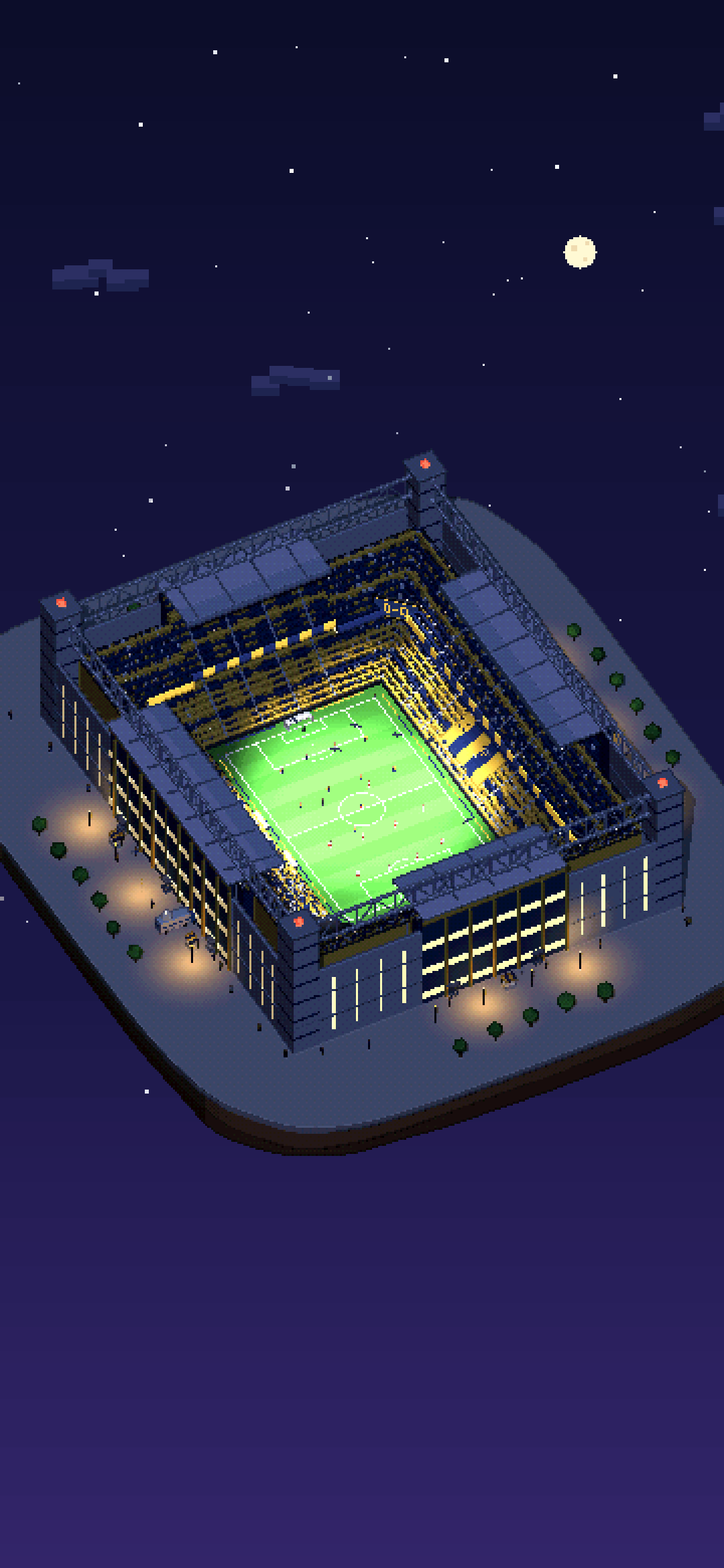
Then it plays a match. The day turns to a floodlit night while two teams, home in yellow and navy stripes, run a scripted move that ends in a goal every 15 seconds. The crowd jumps, one end holds up a yellow-and-navy striped tifo and a giant striped flag passes hand to hand along the far stand, and confetti is thrown after the goal. The corner screens read 0–0 until the goal and then switch to 1–0, and phone lights glow in the stands at night. Outside the walls, fans and stalls fill the forecourt, four cats wander the paving and gulls circle overhead.
Things to spot
- Four lattice trusses on concrete corner towers, with red warning lights on top
- The yellow and navy striped tifo behind one goal
- The giant flag rippling along the far stand
- The scoreboard going from 0–0 to 1–0 after each goal
- Cats on the forecourt and gulls over the roof
What we simplified
- The corner towers, truss layout and roof are an interpretation of the real structure, not a surveyed copy; the steelwork and stand profiles are stylised.
- The tiers, seat counts and capacity are scaled to the model and do not match the real stadium’s numbers.
- The surrounding streets and apartment blocks are generic Kadıköy-style buildings, not the actual neighbourhood.
- The match is a looping scripted move, with a goal every 15 seconds, and the players are plain figures in club colours with no names, numbers or crests.
Questions
Who plays at the Şükrü Saracoğlu Stadium?
Fenerbahçe have played at the Şükrü Saracoğlu Stadium in Kadıköy, on the Asian side of Istanbul, since their ground opened in 1908. The Turkey national team also plays some matches there.
How many people does the Şükrü Saracoğlu Stadium hold?
About 47,900 seats according to StadiumDB and Wikipedia. Older club figures say 50,530 and UEFA quoted 53,586 for the 2009 final, so check the source and year. A rebuild to about 64,000–65,000 seats has been announced.
Who was Şükrü Saracoğlu?
Şükrü Saracoğlu was a long-serving Fenerbahçe president who also served as Turkey’s foreign minister and, from 1942 to 1946, prime minister. The stadium is named after him.
Why is it also called Chobani Stadium?
Sponsors’ names are attached to the ground: Ülker from 2015 and Chobani from the 2025–26 season, the latter under a 10-year naming deal. The full official name is Fenerbahçe Şükrü Saracoğlu Spor Kompleksi, and this page uses the neutral name.
Which final was played at the Şükrü Saracoğlu Stadium?
The 2009 UEFA Cup final, played on 20 May 2009. It was the last final held under the UEFA Cup name before the Europa League, and the first UEFA Cup final played in Turkey.
How was this pixel-art diorama of the stadium made?
It is a real-time Three.js scene running on this page, drawn at low resolution with dark outlines and a small palette, then scaled up without smoothing. The match, crowd, tifo, confetti and scoreboard are all animated live. Press “Explore in 3D” to drag it round and switch between day, dusk and night.
Isometric maps of Istanbul
Istanbul also has 2 isometric pixel-art maps made by the community: the whole city drawn tile by tile in the same SimCity-like style. See the maps of Istanbul →