About Easter Island moai
Rapa Nui, which Europeans call Easter Island, is one of the most remote inhabited places on Earth: a volcanic triangle of about 164 square kilometres in the Pacific, some 3,500 kilometres from the coast of Chile. Polynesian settlers carved its famous statues, the moai, mostly between about 1250 and 1500. More than 900 are known. They are generally understood as the living faces of deified ancestors, set up on stone platforms called ahu and looking inland over the villages they protected.
Almost all of them came from one place: Rano Raraku, a crater of compressed volcanic ash about a kilometre inland from the south-east coast. Around 95 percent of the moai were cut from its slopes, and nearly 400 never left. Many stand buried to their shoulders in quarry debris, so only the great heads show above the grass, and the largest unfinished figure, nicknamed El Gigante, is about 21 metres long and still lies in the rock.
Below the quarry, on the shore, stands Ahu Tongariki, the largest ahu on the island. Its fifteen moai, one of them crowned with a red stone topknot (pukao), stand in a row with their backs to the sea, and the sun rises behind them, which makes it the island’s favourite sunrise spot. The heaviest of them weighs about 86 tonnes, the heaviest moai ever raised on a platform.
Like every moai on the island, they had all been toppled by the late 19th century. In 1960 a tsunami caused by the great earthquake off Chile threw the fallen statues far inland. Between 1992 and 1996, a team led by the archaeologists Claudio Cristino and Patricia Vargas, supported by the Japanese crane maker Tadano, set the fifteen upright again. The island became part of Chile in 1888, and Rapa Nui National Park has been a World Heritage Site since 1995.
The diorama
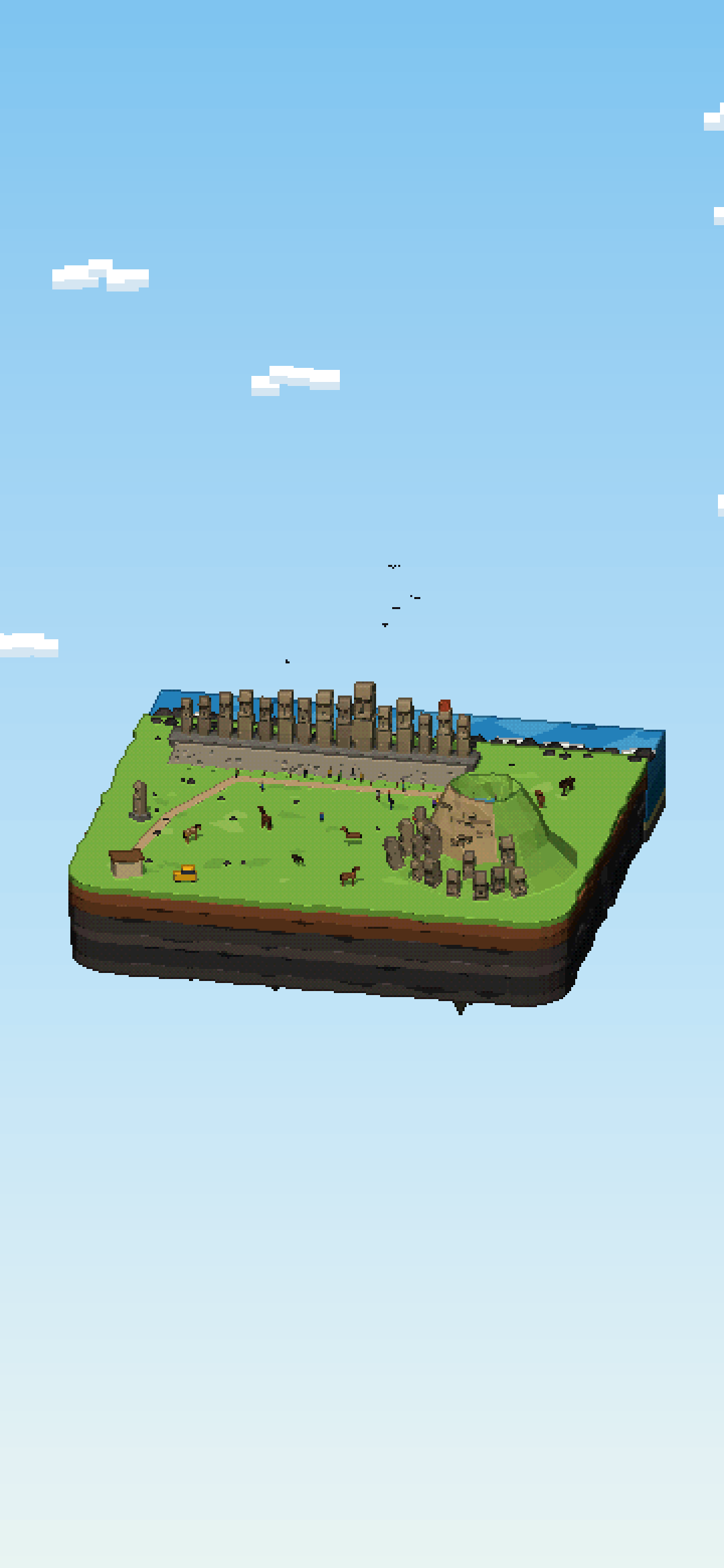
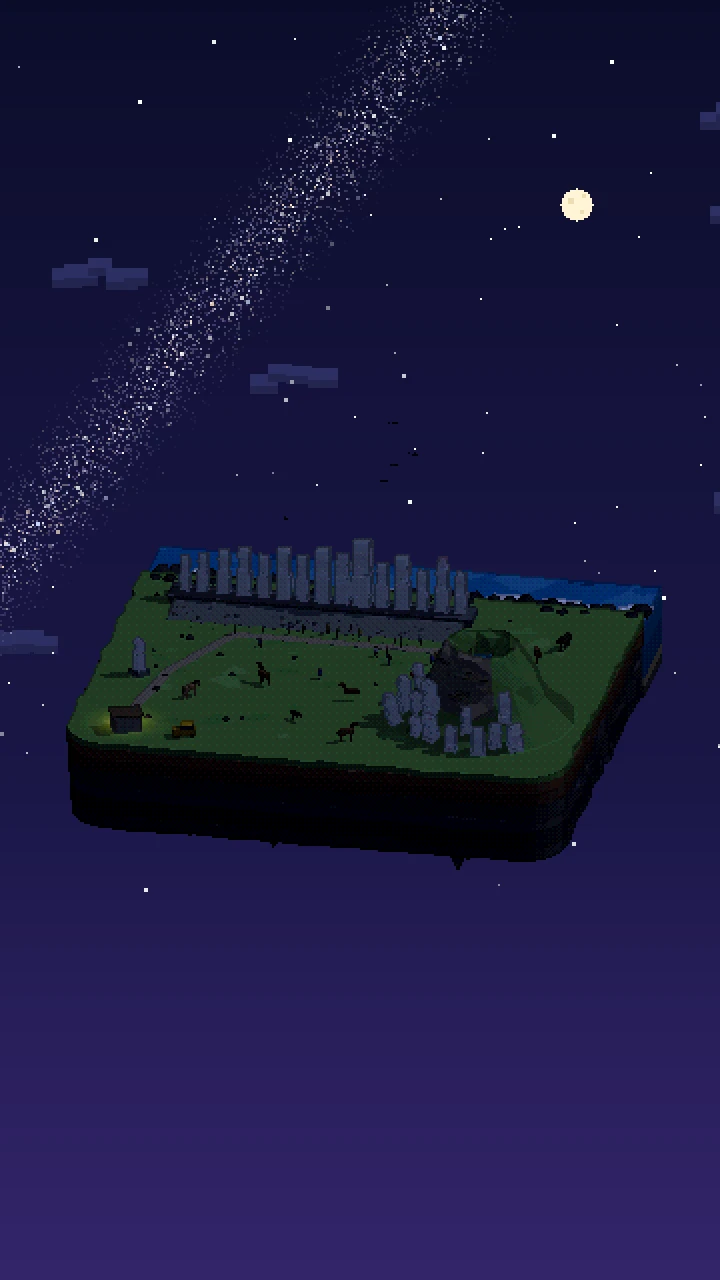
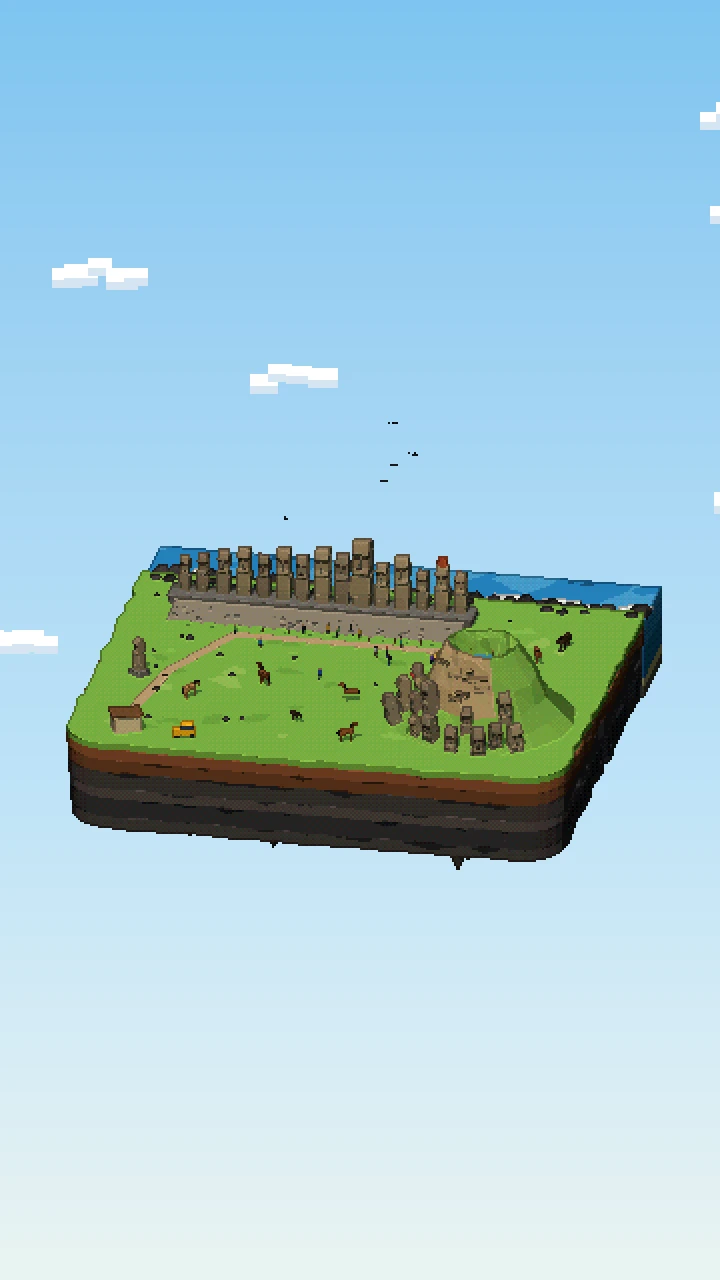
The diorama sets Ahu Tongariki and Rano Raraku side by side on one floating chunk of the island, built in Three.js and rendered as pixel art: the scene is drawn at a low resolution, every edge gets a dark outline, the colours are reduced to a small palette, and the result is scaled up without smoothing. The fifteen moai are modelled one by one, with heavy brows, deep eye sockets, long noses, pursed lips, long ears and hands meeting over the belly, at different heights, and the second from the right wears its red pukao. The platform has a basalt sea wall and a ramp of rounded stones on the land side.
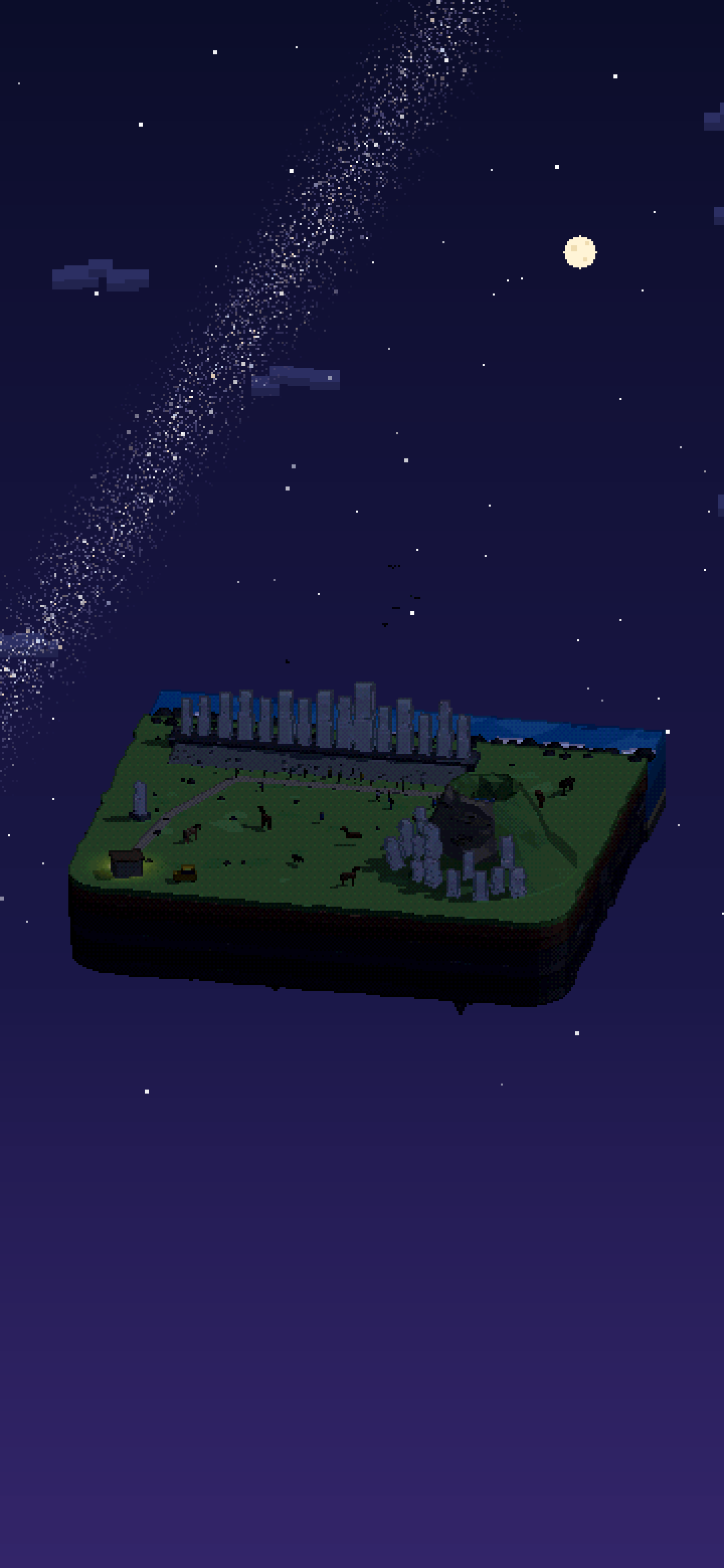
Behind them rises Rano Raraku, with a bare quarry face, a crater lake ringed with reeds, an unfinished moai still lying in the rock and a crowd of buried heads looking down the slope. Waves break on black lava boulders, half-wild horses graze, tourists follow the path past the rope line, and the lone “travelling moai” stands by the entrance. At golden hour the sun comes up behind the row; at night the statues turn pale in the moonlight under the Milky Way, while a few stargazers wait with red torches and a tripod.
Things to spot
- The one moai with a red pukao, second from the right
- Buried heads on the slope of Rano Raraku
- An unfinished moai still lying in the quarry
- Horses grazing between the crater and the ahu
- The travelling moai by the entrance hut
- Stargazers with red torches and a tripod at night
What we simplified
- Ahu Tongariki and Rano Raraku are about a kilometre apart; here they share one small island, and the 100-metre platform is shortened.
- The moai follow the classic Rano Raraku style but are not portraits of the individual statues, and the buried heads are fewer and more evenly spread than the real ones.
- The crater is drawn as a simple cone with one quarry face; the real Rano Raraku is lower, broken on one side and quarried inside and out.
Questions
How many moai are there on Easter Island?
More than 900 moai are known on Easter Island. Around 95 percent were carved at the Rano Raraku quarry, and nearly 400 of them are still there, many buried up to their shoulders so that only the heads show.
Why do the moai face inland?
The moai are generally understood as the living faces of deified ancestors. Most stand on ahu platforms near the coast with their backs to the sea, looking inland over the communities they were meant to protect.
What is Ahu Tongariki?
Ahu Tongariki is the largest ahu on Easter Island, with fifteen moai standing in a row. A tsunami in 1960 swept its fallen statues inland, and a team led by Claudio Cristino and Patricia Vargas, with help from the Japanese crane maker Tadano, restored it between 1992 and 1996.
When were the Easter Island statues made?
Most of the moai were carved between about 1250 and 1500, from volcanic tuff at Rano Raraku. Some were crowned with topknots of red scoria from the Puna Pau quarry. By the late 19th century every moai on the island had been toppled.
How was this pixel-art diorama of the Easter Island moai made?
It is a real-time Three.js scene running on this page, drawn at 360 × 640 pixels with dark outlines and a small palette, then scaled up without smoothing. Each of the fifteen moai of Ahu Tongariki is modelled with its brow, nose, ears and hands, next to the Rano Raraku quarry. Press “Explore in 3D” to drag it round and switch between day, sunrise and a night under the Milky Way.